OUR JOURNEY (2007 – 2026)
1
2007
HFHS Registered
Started working in rural Uttarakhand
2
2012 – 2014
Swajal Project
Provided clean drinking water to 1500 families
3
2014 – 2017
Sanitation & Hygiene Program
Implemented sanitation and hygiene activities benefiting rural communities
4
2021 – 2026
Education Support
Provided educational support to 5000 students
5
2021 – 2026
Jal Jeevan Mission Work
Provided clean drinking water to 15,000 families
6
2013 – 2026
Rain Water Harvesting
Constructed and revived 80+ tanks for water conservation
All Projects

Empowering Women, Transforming Rural Communities
2013

Sustainable Water Solutions for Rural Communities
2013

Delivering Safe Drinking Water to 87,942 Rural Residents Across 115 Villages
2021

Empowering 5,256 Government School Students Through Digital Education
2021
Empowering Women, Transforming Rural Communities
2013 – 2026
Description
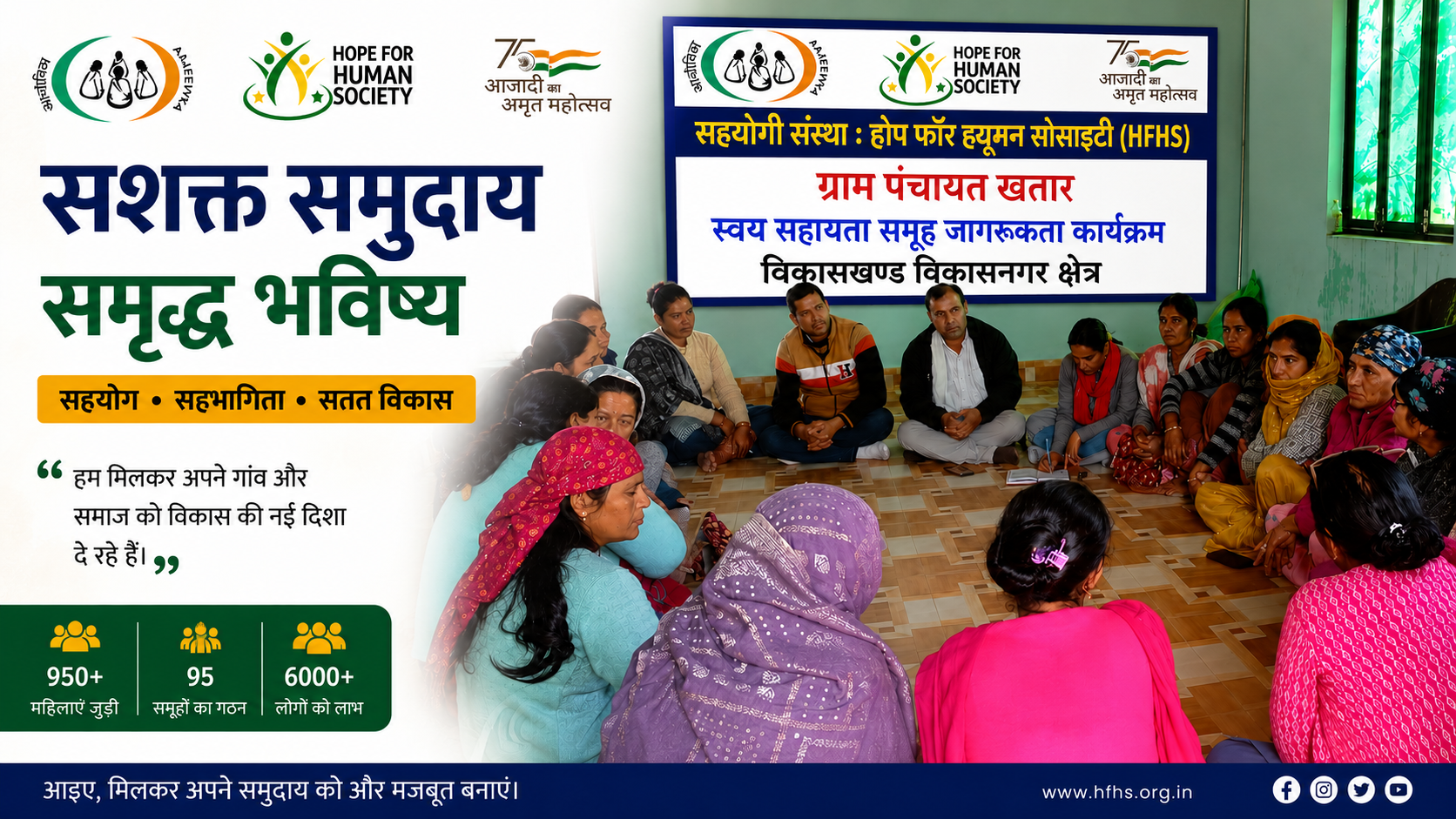
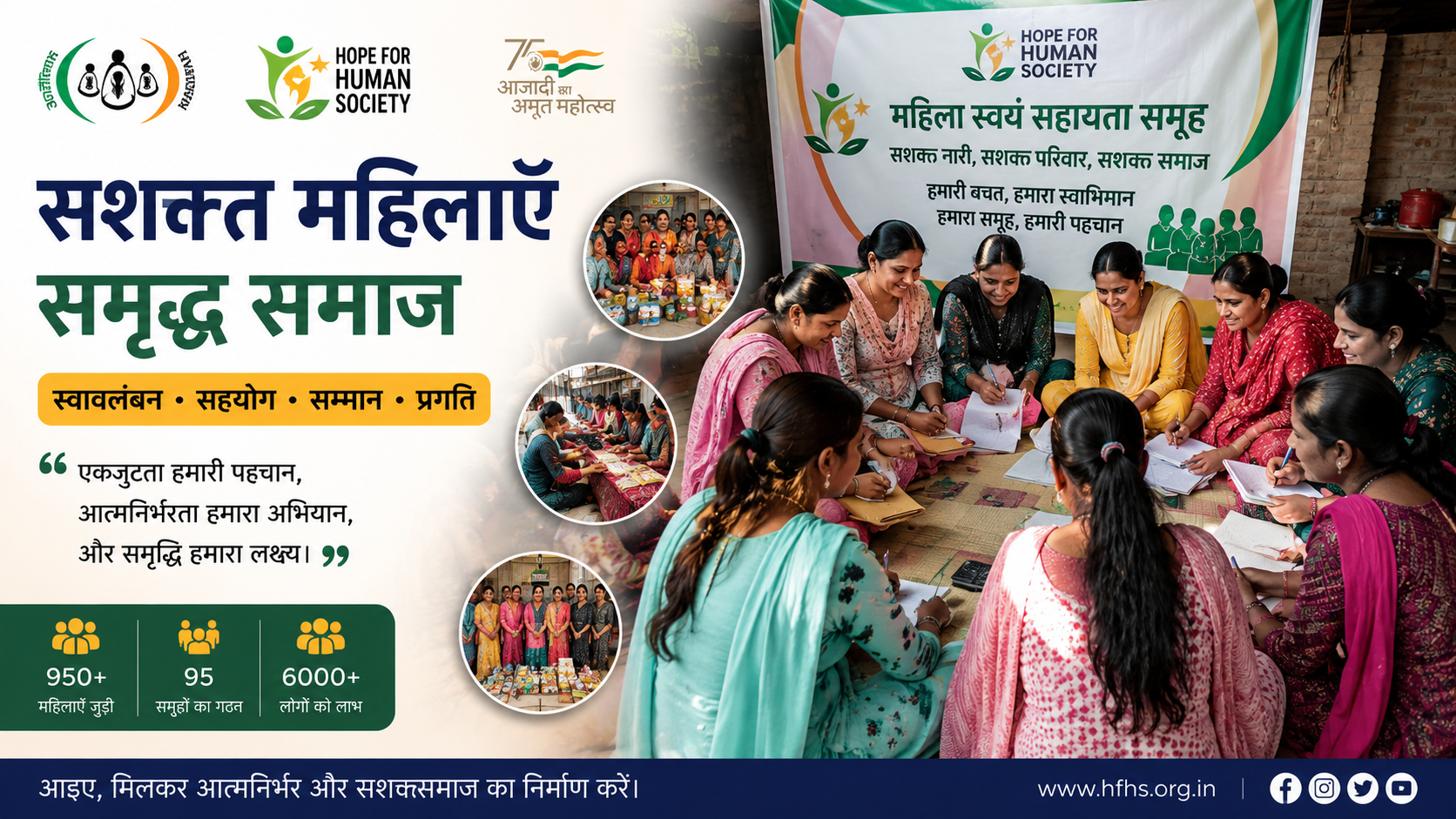
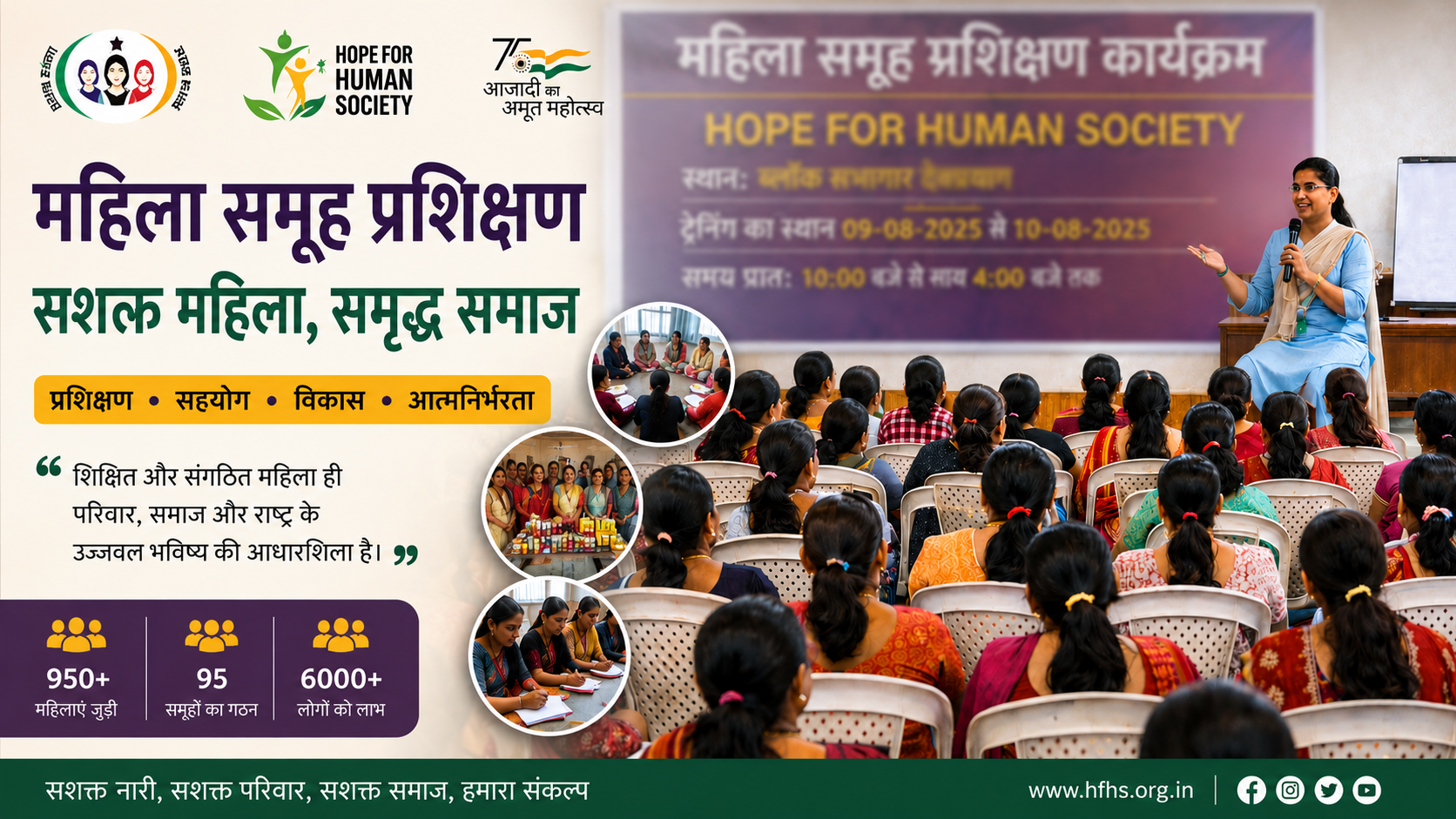
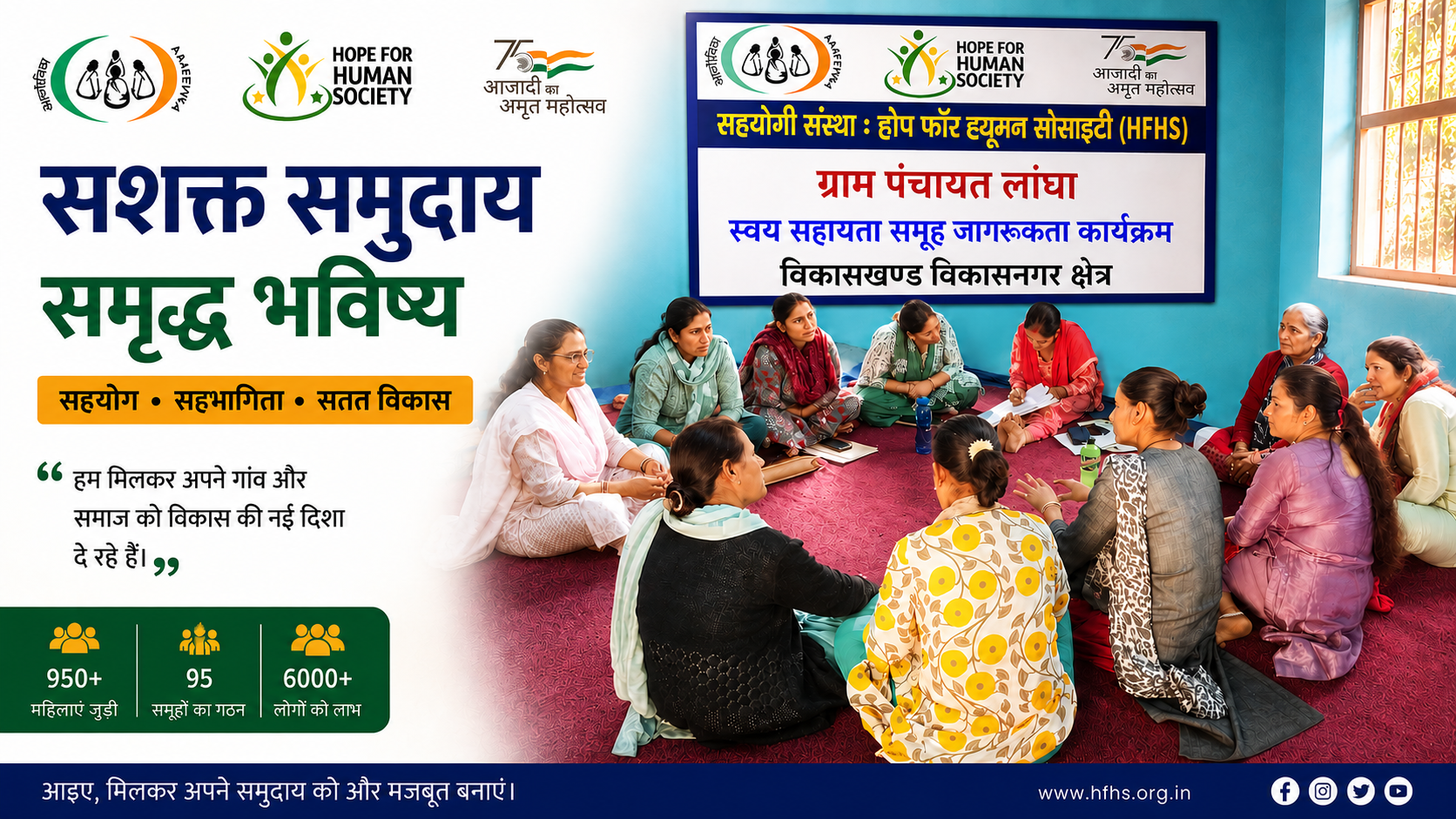
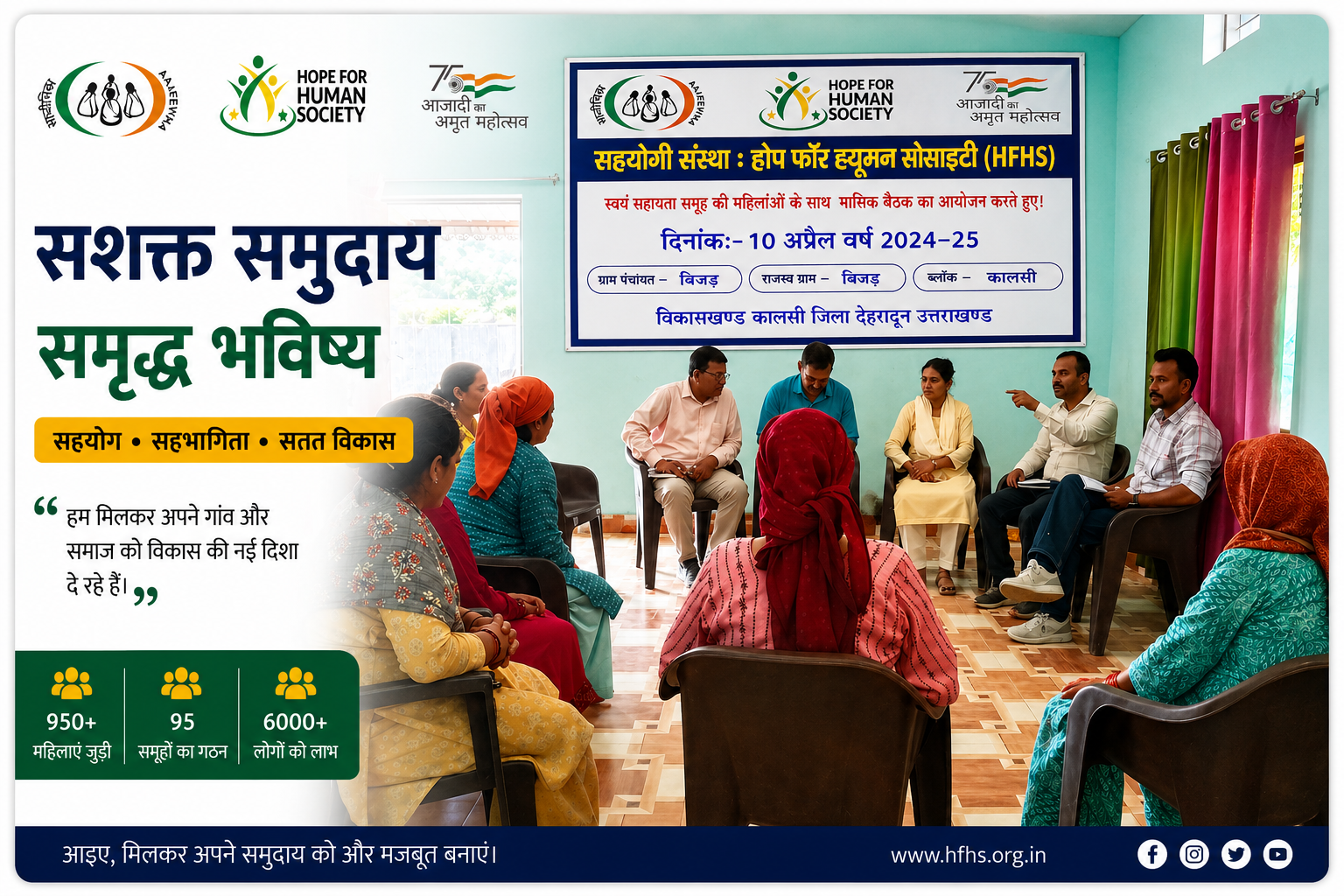
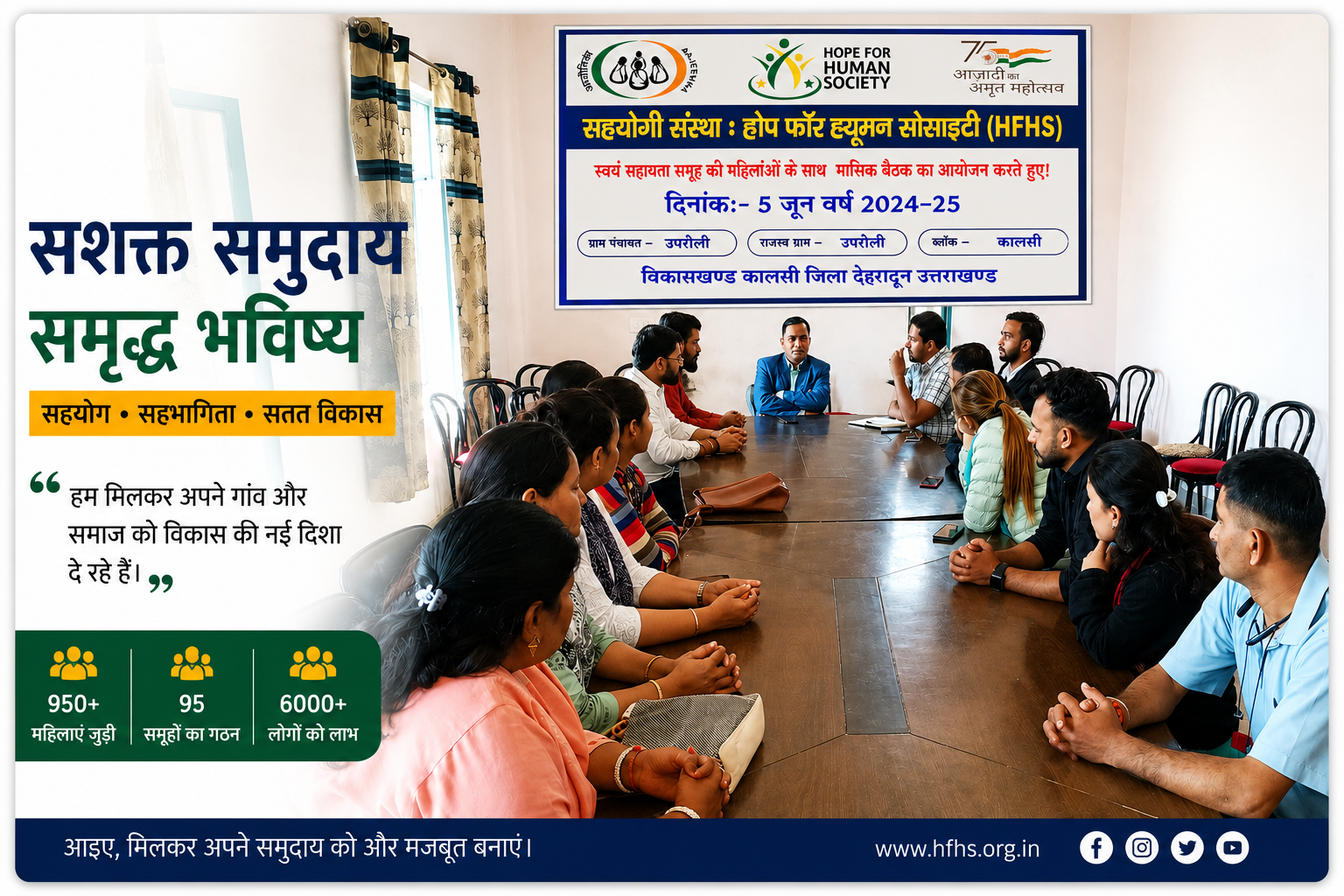
From 2013 to 2026, Hope for Human Society implemented a women’s empowerment and rural livelihood initiative across more than 90 villages in the Kalsi and Vikasnagar development blocks of Dehradun district, Uttarakhand. As part of this initiative, the organization formed 95 Self-Help Groups (SHGs), bringing together 950 women to promote financial inclusion, regular savings, collective decision-making, leadership development, and sustainable livelihood opportunities. The programme directly benefited approximately 950 rural households, impacting more than 6,650 people. Nearly 60% of the women associated with these SHGs successfully engaged in self-employment and income-generating activities, leading to significant improvements in their economic well-being. The initiative also strengthened women's confidence, enhanced their participation in community decision-making, and promoted social inclusion, establishing a sustainable and replicable model for women-led rural development.
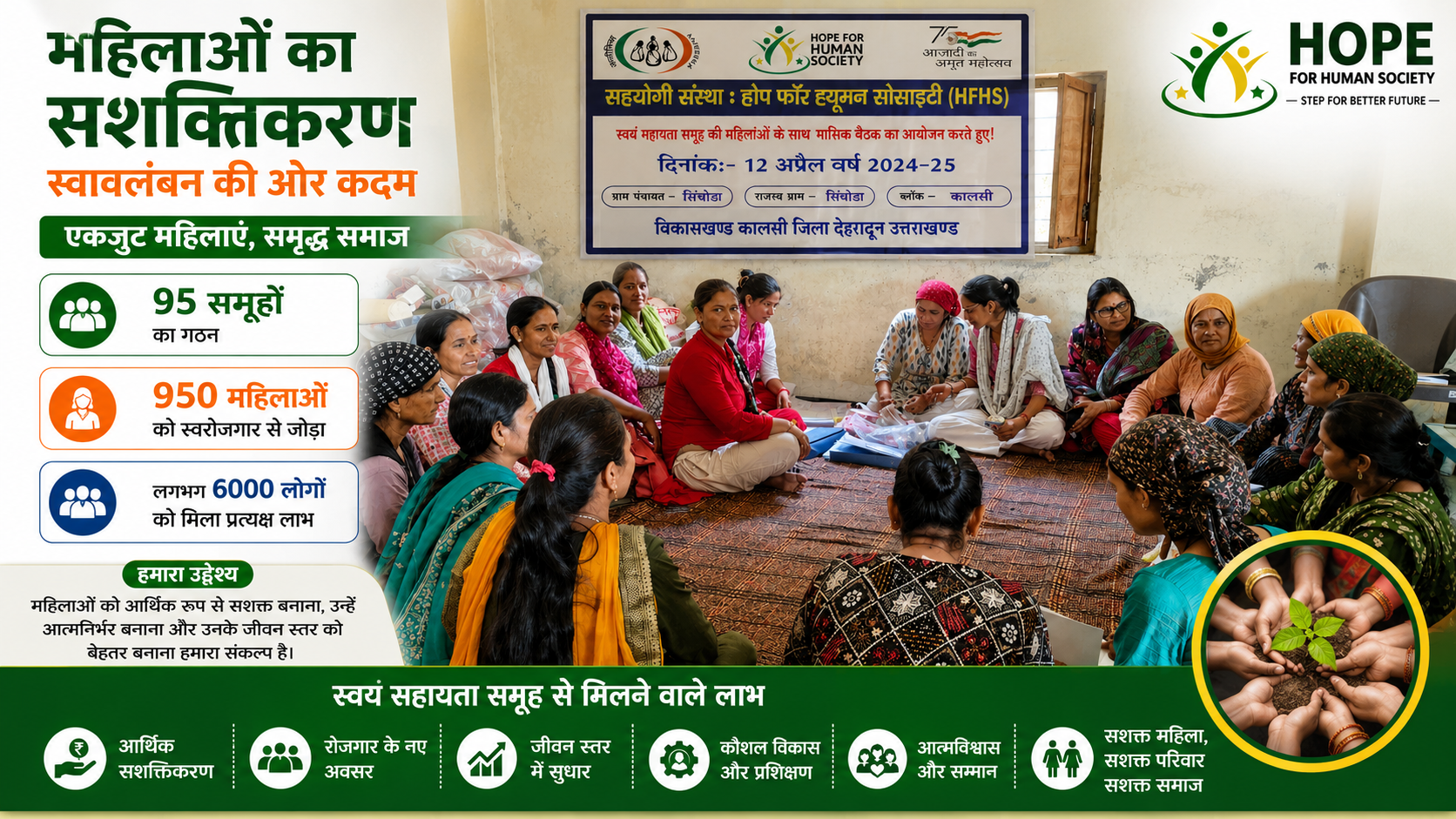
950
Families Benefited
90+
Villages Covered

6650+
Individuals Benefited
2013
–
2026
Project Duration